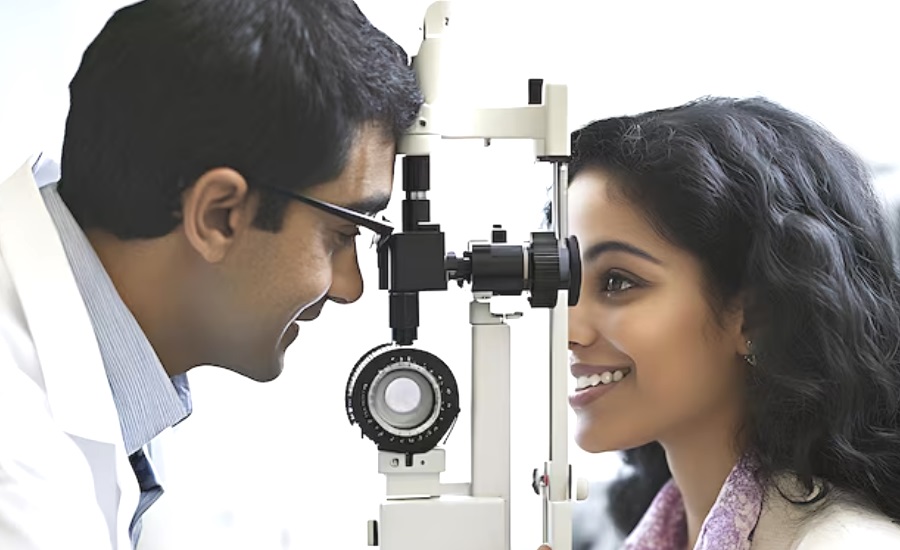
Visual field examination

Visual field examination

29 July, 2024 0 Like

Visual field examination assesses the scope of vision, including central and peripheral vision, to identify defects or abnormalities.


Detail Visual field examination

Purpose of Visual Field Examination

Detection of Visual Field Defects:

  • Identifies scotomas (blind spots) and peripheral vision loss.
  • Differentiates between types of defects (e.g., arcuate, bitemporal, homonymous).

Monitoring Progression of Diseases:

  • Glaucoma.
  • Optic neuritis.
  • Retinal diseases like retinitis pigmentosa.

Evaluation of Neurological Conditions:

  • Brain tumors.
  • Stroke.
  • Pituitary adenomas.

Screening:

  • Used in routine ophthalmologic exams or preoperative assessments.

Other Detail

Types of Visual Field Tests

Confrontation Visual Field Test:

  • A quick, manual screening test.
  • The patient focuses on the examiner’s nose while peripheral vision is tested using hand movements or finger counting.

Amsler Grid Test:

  • Evaluates the central visual field.
  • Patients identify distortions or missing areas in a grid pattern, often used in macular disease evaluation.

Automated Perimetry:

  • Provides precise, quantitative analysis.
  • Examples: Humphrey Field Analyzer (HFA), Octopus Perimeter.
  • Patient presses a button upon detecting light stimuli at various locations.

Goldmann Perimetry:

  • Manual, kinetic test mapping the visual field with moving light targets of varying intensities and sizes.
  • Ideal for assessing peripheral vision loss or complex visual field defects.

Frequency Doubling Technology (FDT) Perimetry:

  • Detects early glaucomatous damage by presenting flickering striped patterns.

Octopus Kinetic Perimetry:

  • Combines static and kinetic testing for more detailed mapping.

Parameters Assessed in Visual Field Testing

Field Extent:

  • Normal visual field:
    • 60° nasally.
    • 100° temporally.
    • 60° above and 75° below the horizontal meridian.

Defects:

  • Scotomas:
    • Central: Near fixation.
    • Paracentral: Near central vision.
    • Arcuate: Follows the nerve fiber layer.
  • Hemianopia:
    • Bitemporal: Chiasmal lesions.
    • Homonymous: Post-chiasmal lesions.
  • Quadrantanopia: Loss in a specific quadrant.