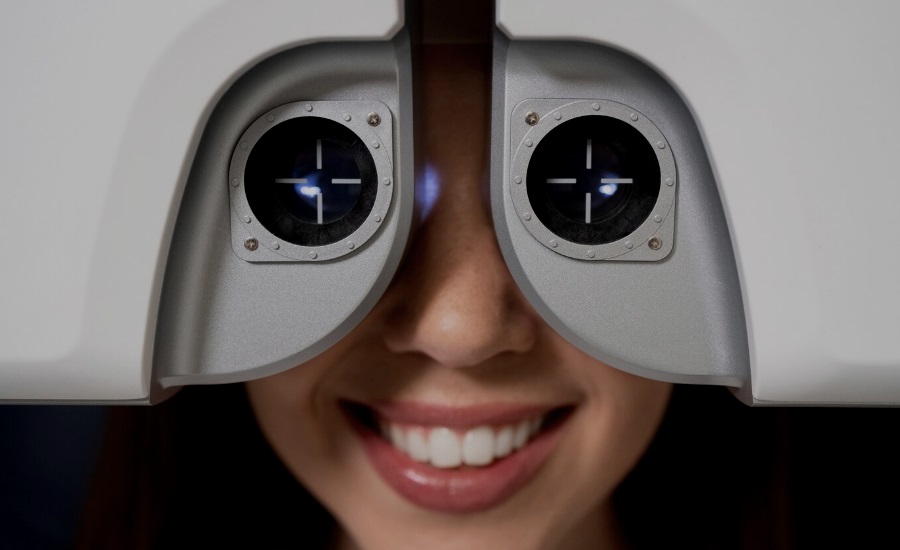
Anterior segment OCT

Anterior segment OCT

29 July, 2024 0 Like

Anterior Segment Optical Coherence Tomography (AS-OCT) is a non-invasive imaging technology.


Detail Anterior segment OCT

Principle of AS-OCT

AS-OCT uses near-infrared light to produce detailed images of the anterior eye. The technology measures the time delay and intensity of light reflected from different ocular structures to create cross-sectional images.

  • Wavelength: Uses longer wavelengths (~1300 nm) than posterior segment OCT, optimizing visualization of the anterior segment.
  • Resolution: High spatial resolution (5–20 microns) enables detailed assessment of small structures.

Applications of AS-OCT

Corneal Evaluation:

  • Measures corneal thickness and curvature (pachymetry and topography).
  • Identifies and monitors keratoconus, corneal edema, dystrophies, and scars.
  • Assesses surgical outcomes like LASIK flap thickness or corneal grafts.

Anterior Chamber Angle Assessment:

  • Evaluates angle structures in glaucoma, particularly in angle-closure glaucoma.
  • Measures parameters like angle opening distance (AOD) and trabecular-iris space area (TISA).

Iris and Ciliary Body:

  • Visualizes iris lesions, cysts, and abnormalities.
  • Examines the effect of angle closure or pupillary block.

Pre- and Post-Surgical Assessment:

  • Determines suitability for refractive surgeries like LASIK or SMILE.
  • Evaluates outcomes of keratoplasty, cataract surgery, and anterior segment implants (e.g., phakic IOLs).

Lens and Cataract:

  • Measures lens thickness and position.
  • Useful in evaluating subluxated lenses or anterior segment changes post-surgery.

Anterior Segment Tumors and Cysts:

  • Detects and monitors anterior segment masses with high accuracy.

Trauma Assessment:

  • Detects structural changes like anterior chamber depth reduction, lens displacement, or iris injuries.

Other Detail

Advantages of AS-OCT

Non-Invasive:

  • Provides detailed imaging without contact or anesthesia, enhancing patient comfort.

High Resolution:

  • Offers fine structural detail, surpassing ultrasound biomicroscopy in some applications.

Rapid and Efficient:

  • Quick imaging with minimal preparation or patient cooperation.

Quantitative Analysis:

  • Measures parameters like corneal thickness, anterior chamber depth, and angle dimensions.

Wide Applicability:

  • Useful in diagnostics, surgical planning, and postoperative follow-up.

Limitations of AS-OCT

Penetration Depth:

  • Limited ability to image deeper structures like the ciliary body or sclera.

Shadowing Artifacts:

  • Structures behind highly reflective tissues (e.g., corneal scars) may be obscured.

Cost and Accessibility:

  • Advanced systems may not be readily available in all clinics.

Dependence on Optical Clarity:

  • Opacities in the cornea or anterior chamber can interfere with image quality.

Limited Field of View:

  • Smaller imaging area compared to ultrasound biomicroscopy.

Techniques in AS-OCT Imaging

Corneal Imaging:

  • Pachymetry: Maps corneal thickness across its entirety.
  • Keratoconus detection: Identifies thinning and steepening patterns.

Angle Imaging:

  • Evaluates open and narrow angles, aiding in glaucoma diagnosis.
  • Dynamic imaging under different lighting conditions to assess angle changes.

Post-Surgical Imaging:

  • Assesses LASIK flaps, corneal grafts, or IOL positioning.

Anterior Chamber Depth (ACD):

  • Measures the distance from the corneal endothelium to the lens.